Executive orders are not laws

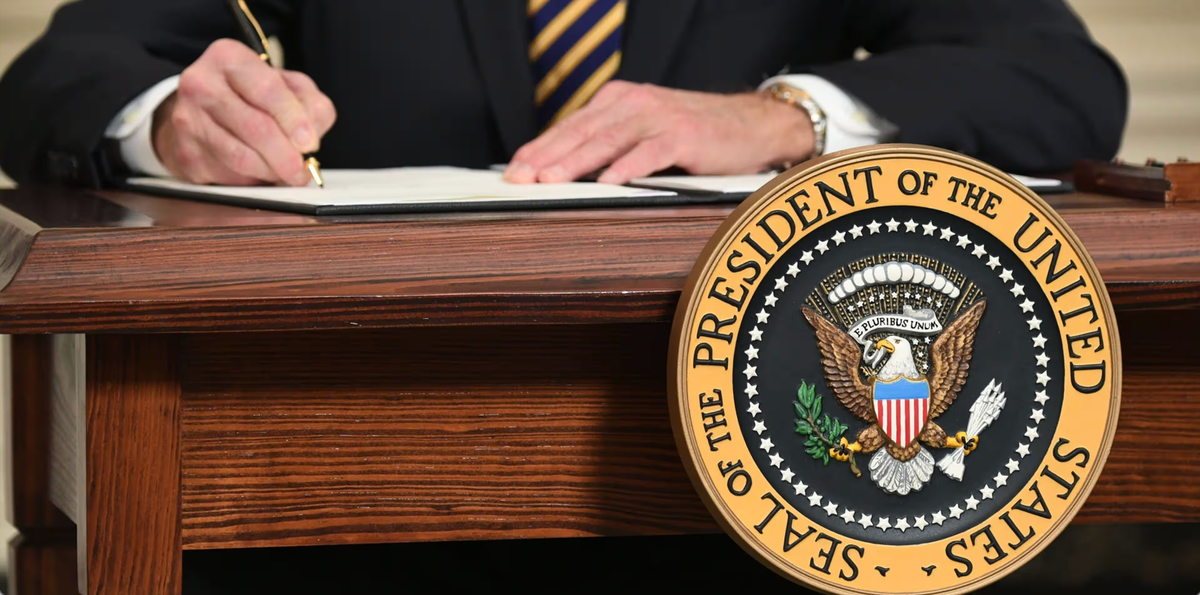
I want to talk to you about the executive order Trump signed on March 31st targeting mail-in voting. I know it’s alarming. I also know that a lot of the coverage is making it sound scarier than the legal reality warrants. I want to give you the facts, tell you what we’re doing about it, and be honest about what actually concerns me.
What the executive order does.
It directs the Department of Homeland Security to compile a list of citizens in every state using federal databases, and then instructs the U.S. Postal Service to deliver mail ballots only to voters on an approved list. It also threatens to withhold federal funding from states that don’t comply and authorizes the Attorney General to investigate election officials who send ballots to ineligible voters.
Why I’m not panicking.
The federal government does not control elections. States do. This is not an opinion. It’s Article I, Section 4 of the Constitution, reinforced by the Tenth Amendment. The president has no role in how states administer their elections, and executive orders are not legislation. They are memos written on presidential letterhead indicating what the executive would like to see happen.
There is no federal list of citizens. The databases the order relies on are riddled with errors and gaps. Most states don’t even collect full Social Security numbers during voter registration. UCLA election law expert Rick Hasen has said plainly that the timing makes this virtually impossible to implement before November, even if it’s not blocked by courts.
And the U.S. Postal Service, which is being asked to become a de facto election administration agency, is months away from running out of money. It can barely deliver the mail. The idea that it’s going to stand up a voter verification system across 50 states in seven months is not a serious proposal.
Trump himself voted by mail in Florida last month. So.
What we’re doing.
The day the order was signed, I emailed our lawyers at Campaign Legal Center. We work with CLC on impact litigation, and we have never lost a case against a state on voting access. CLC recently received a major grant from the MacArthur Foundation specifically for lawsuits like this one. Our legal costs are fully funded by other philanthropists, which means every dollar you give to VoteAmerica goes to our programs, not to legal fees.
Five lawsuits have already been filed against this executive order. The NAACP, Common Cause, Black Voters Matter, the League of Women Voters, 23 state attorneys general, and both Democratic congressional leaders are all in court. This order is going to be challenged from every direction, and the legal precedent is overwhelmingly on the side of the states.
What actually concerns me.
The executive order itself will probably be blocked. What worries me is the downstream effect: the confusion it creates, the voters who hear about it and decide not to bother, the election officials in certain states who feel pressure to volunteer for compliance even when they don’t have to. Voter suppression doesn’t have to be legally enforceable to work. It just has to make people believe voting is harder than it is.
That is exactly why VoteAmerica exists. We arm voters with three pieces of information: when to vote, where to vote, and what to bring. The more chaos the federal government creates around elections, the more important it is that someone is out there giving people clear, accurate, nonpartisan information. That’s us.
Our practical advice to voters right now:
If you vote by mail and it’s within two weeks of the election, use a drop box or hand-deliver your ballot to your local election office. Don’t take chances with mail delivery timelines.
And regardless of what you hear in the news, check your registration status and know your plan to vote. Our tools make this easy. You can find them on our website or by using this link: www.voteamerica.org/am-i-registered-to-vote/
We will be okay. Not because the threats aren’t real, but because the legal infrastructure to fight them is already in place, and because organizations like ours exist to make sure voters have what they need regardless of what the federal government does.