VoteAmerica strategic update


Moving forward I’m going to try to divide my updates into three buckets:
- Strategic updates - what we’re thinking about and what’s guiding our work
- Operational updates - the nuts and bolts of what we’re doing
- Research updates - the results of programmatic analysis, where applicable
This update falls into the first bucket. This captures our plan for the next 2-4 years. The plan is driven by the fact that we’re spending billions of dollars per cycle on antiquated and ineffective tactics, while hostile foreign and domestic actors undermine our democracy.
We have an opportunity, right now, to admit that what we’re doing isn’t working, and to commit to change. We’ll gain more in 2022 and beyond by embracing modern, scalable tactics for voter registration and turnout; and by focusing on the systemic changes we need to ensure that US democracy thrives for decades to come.
So that’s what VoteAmerica is going to do. We’re going to invest our criminally limited budget strategically so that we can provide exponential returns on investment.
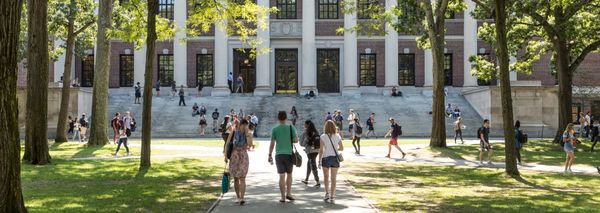
First, pre-registration. Studies show that the single best predictor of how consistently you vote is how young you were the first time you voted. The idea here is that the early investment will pay dividends over the course of the newly minted voter’s lifetime. That’s why we’re targeting the 15.9 million high school students in America via our FutureVoter project. Students provide their name, date of birth, and cell phone number: we then programmatically text them on their 18th birthday and encourage them to register to vote.
We’re not the first group to talk about targeting high school students. The innovation here is our approach to scale. We’re not going to go classroom to classroom. To achieve the goal of reaching high school students at scale, we have two target partnerships for this program: the SAT and the ACT.
Second, large scale voter registration. I’ll start by making it very clear that voter registration is a form of voter suppression. Voter registration is paperwork, it is a task to complete so that citizens can participate in democracy. For reasons unclear, progressives celebrate voter registration, which encourages us all to spend too much time and money on an activity that should not exist (the long-term solution here is Same Day Registration, aka SDR).
We’re taking a two-pronged approach to the voter registration problem. We’re scaling up our voter registration efforts considerably, via integrations with software and services that citizens are already using. This will allow us to reach millions of people for pennies. We also started a 501c4 that will focus on pushing for SDR, everywhere, starting with states that already have voter ID laws, such as Indiana.
We started by asking ourselves this question: If we woke up tomorrow and no one was registered to vote, how would we rebuild the voter registration rolls? Not surprisingly, no one said “grab a clipboard and go door to door.” Instead we thought about all of the companies that currently exist that help you fill out paperwork, and decided we would integrate with those companies. We’re focusing on a handful of verticals:
- Movers
- 40 million people move a year, and all of them need to re-register to vote.
- High school students
- There are 15.9 million high school students.
- College and university students
- There are just under 20 million college and university students.
- Tax-filers
- 150 million people file their taxes every year (and 93% of them file online).
Our goal with all of the above is to build a very opted-in list of voters who we can then mobilize to actually vote. We’ve tested these types of corporate partnerships in 2020, so we know they work.
Voter registration is boring, tedious, and offensive in every way, and progressives should stop celebrating it. VoteAmerica cannot stand voter registration, which is why we’re so good at it. We treat it like the annoyance it is, and just try to get it over with as quickly as possible. We plan to register at least 5 million people in 2022, and at least 10 million in 2024.
Third, GOTV. Let’s not mince words: elections in the US are expensive, and the amount of money spent is increasing exponentially. The 2020 election cost 20 billion dollars, with approximately 80% of that money being spent on broadcast TV ads, despite the fact that viewership rates have dropped precipitously over the past few years. Broadcast TV doesn’t increase turnout, but it does make political consultants wealthy: they’re compensated a percentage of the money they spend, so they’re incentivized to spend a lot of money.
This is why we’re into billboards. They’re cheap, they’re effective, and they allow us to fully saturate areas with a simple VOTE ON DATE message. 37% of people polled in October 2016 did not know the date of the election; 40% of Americans didn’t vote in the 2016 election. These facts are not unrelated. That’s why we use billboards to let people know when the election is.
Some bullets:
- The low production costs combined with high CPMs (cost per 1000 views) make outdoor advertising one of the most affordable advertising channels available.
- Billboard and transit ads work best as an amplifier for other marketing efforts.
- Studies have shown that people who see billboard or transit ads are more likely to respond to later outreach, including via SMS and mail. So it complements our efforts in that geography as well as those of other groups whether they are carrying partisan or nonpartisan messages.
In past election cycles, our billboards were so ubiquitous that they became a stock image, used by media outlets without attribution. The billboards themselves have come to represent voting.
Fourth, voter protection. Over the past few years, the VoteAmerica team has noticed an aversion to using the phone. While this isn’t exactly a scientific observation, common sense suggests that many potential voters, including young voters, are more comfortable using SMS than dialing a phone at this point.
So, we piloted a text-based “Voter Helpline” (VHL). This project involved a short-code, Slack, the Twilio API, and a few dozen trained volunteers. Voters texted a shortcode, the messages were routed to a dedicated Slack workspace, trained volunteers would assign the message to themselves and then respond, and the responses were conveyed back to the voter via SMS. Our plan to market this tool involves partners, such as the Lawyers Committee and other progressive organizations. If they are willing to publicize the short code, we are confident we can handle the technology, volunteer recruitment, and volunteer training.
With so much at stake, we’re not waiting: we’re already doing the work to form the relationships and build the tech required to deliver scalable voter outreach. Meeting this challenge requires long-term investment in partnerships, technology, and advocacy. We’ve identified smart and cost-effective structural solutions to long-term structural problems, and now we’re looking for smart investors to help us scale our team and achieve our shared goal of living in a functioning democracy. The investments in the infrastructure we’re building will pay dividends for years to come. Dollar for dollar, there isn’t a better investment to be made than in the VoteAmerica team and vision.
Thanks for reading,
Debra